
Iron Oxide Pigments for Colored Cement
Date Published
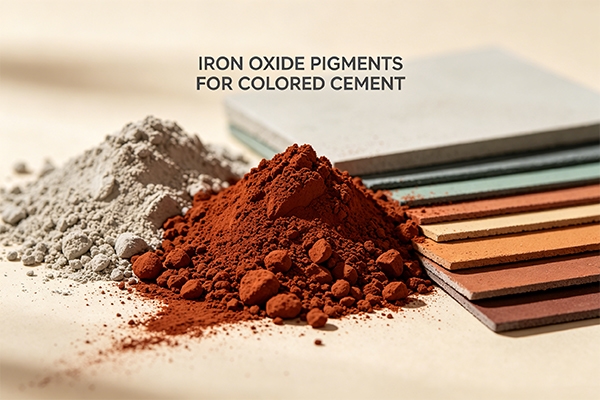
Iron oxide pigments are the most widely used colorants for colored cement, concrete, and masonry products because they are stable, UV-resistant, and compatible with highly alkaline cement environments.
Why iron oxide pigments are used in colored cement
Colored cement systems rely on pigments that can survive harsh conditions:
- High alkalinity (pH ~12–13) in cement paste
- UV exposure outdoors
- Moisture and freeze-thaw cycles
- Long-term durability requirements
Iron oxides perform well because they are:
- Chemically stable in cement
- Insoluble in water
- Resistant to UV degradation
- Non-migrating (color stays locked in the matrix)
How they’re used in concrete and cement
Pigments are typically added during mixing:
- Dosage: usually 1%–6% of cement weight (sometimes up to ~10% for intense color)
- Added directly into the mixer with cement, sand, and aggregates
- Must be evenly dispersed to avoid streaking or mottling
The final color depends on:
- Cement type (gray vs. white cement)
- Pigment dosage
- Water-cement ratio
- Aggregate color
White cement is often used when bright or pure colors are desired.
Key advantages in cement applications
- Excellent lightfastness (won’t fade outdoors)
- Cost-effective compared to organic pigments
- Compatible with admixtures and additives
- Long service life (matching the concrete itself)
Typical applications
- Colored paving blocks and pavers
- Roof tiles and fiber cement products
- Architectural concrete panels
- Decorative concrete floors and terrazzo
- Stucco and mortar coloring