Iron Oxide Pigments for Coloring Shoe Soles
Date Published
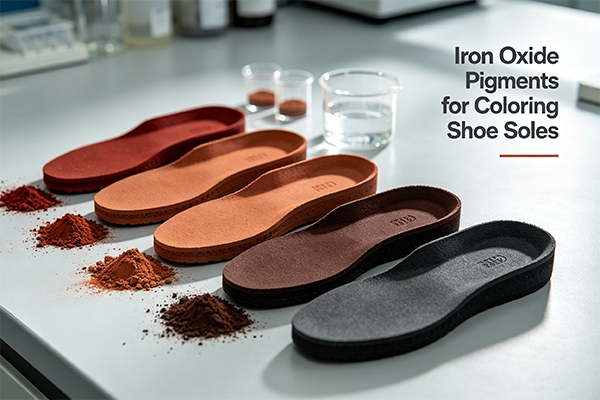
In footwear, Iron oxide pigments are commonly used to color both outsoles (rubber) and midsoles (foam rubbers or thermoplastics)—especially when brands want earthy tones, neutrals, or long-lasting colors that won’t fade outdoors.
Where iron oxides are used in shoe soles
1. Rubber outsoles
Common materials:
- Natural rubber (NR)
- Styrene-butadiene rubber (SBR)
- EPDM rubber
Iron oxides are used for:
- Tan, brown, red, brick, gum-like colors
- “Vintage” or natural-looking soles
- Trail shoes, boots, and lifestyle sneakers
Typical loading:
- 1–8 phr for standard coloration
- Up to 10–15 phr for strong opaque colors
2. EVA foam midsoles
Ethylene-vinyl acetate (EVA) midsoles are one of the biggest uses of iron oxides in footwear.
Ethylene-vinyl acetate is often pigment-colored using:
- Yellow iron oxide → beige, cream foam tones
- Red iron oxide → warm orange/tan midsoles
- Black iron oxide → darker or “aged foam” aesthetics
These pigments are preferred because they:
- Don’t migrate or bleed in foam
- Survive high foaming temperatures
- Provide consistent bulk color (important for thick midsoles)
3. TPU and TPR soles
Thermoplastic polyurethane (TPU) and thermoplastic rubber (TPR) are also common:
Thermoplastic polyurethane
Iron oxides here are used for:
- Work boots (brown, black, safety colors)
- Outdoor footwear soles
- Molded performance outsoles
They disperse well in melt-processing, especially with masterbatch systems.
Why iron oxides are popular in shoe soles
- UV stability → no fading in sunlight or outdoor wear
- Heat stability → survive injection molding and EVA foaming
- Low cost → cheaper than organic pigments
- Non-bleeding → colors stay locked in the polymer
- Natural aesthetic range → earth tones, gum, clay, rust, sand
Effects on sole properties
Compared to tires, soles tolerate pigment loading better, but effects still matter:
- Slight increase in hardness at higher loadings
- Minimal impact on flexibility at normal dosing
- Can slightly affect foam density in EVA if overused
- No reinforcement benefit (purely cosmetic functional additive)
Dispersion is still key—poor mixing can cause:
- streaks in molded soles
- uneven foam coloration
- visible speckling in light-colored EVA
Typical formulation practice
- Used as masterbatch in EVA or rubber compounds
- Often combined with:
- Titanium dioxide (for whitening/opacity control)
- Carbon black (for dark shades)
- Calcium carbonate (cost and texture control)
- Added before foaming or injection molding stage
Where you see it in real footwear
- Hiking boots (brown/red rubber lug soles)
- Skate shoes (gum-colored rubber)
- Retro sneakers (aged beige midsoles)
- Safety/work boots (dark brown/black TPU soles)
- Lifestyle sneakers with “earth tone” palettes