
Iron Oxides for Coring Fertilize
Date Published
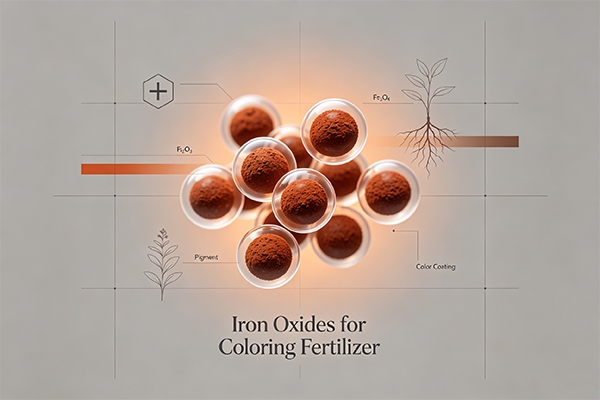
Iron oxides are widely used in fertilizer manufacturing both as functional additives and as pigments, especially when producing colored or coated fertilizers. They are not just decorative—they can also improve product handling, branding, and sometimes stability.
Role of iron oxide in fertilizer production
1. Coloring agent (most important use)
Iron oxides are used to give fertilizers distinctive colors such as:
- Red / red-brown (hematite-based)
- Yellow / brown tones (hydrated iron oxides)
- Black (magnetite-based blends)
This creates product differentiation, especially for:
- NPK granular fertilizers
- Coated controlled-release fertilizers
- Specialty fertilizers for turf, horticulture, and greenhouse use
2. Coating and surface protection
Iron oxide pigments are often embedded in:
- Polymer coatings
- Sulfur-coated urea (SCU)
- Resin-coated slow-release fertilizers
They help:
- Improve coating uniformity
- Reduce UV degradation of coatings
- Enhance abrasion resistance during transport
3. Flow and handling improvement
Although not the primary function, iron oxide coatings can:
- Reduce fertilizer caking
- Improve granule flowability
- Lower dust formation during handling
This is especially useful in humid storage conditions.
Advantages of using iron oxides in fertilizers
1. Chemical stability
Iron oxides are:
- Insoluble in water
- Chemically inert with most fertilizer nutrients
- Stable across a wide pH range
This means they do not interfere with nutrient release or soil chemistry.
2. Environmental safety
They are considered:
- Non-toxic in agricultural use levels
- Naturally occurring minerals (iron is an essential micronutrient for plants)
Even though their main role is pigmentation, trace iron can still be beneficial in iron-deficient soils.
3. Cost-effective pigmentation
Compared with organic dyes:
- Iron oxides are cheaper
- More light- and heat-stable
- Longer-lasting in outdoor storage conditions
This makes them ideal for large-scale fertilizer manufacturing.
4. Branding and product identification
Color-coded fertilizers help manufacturers:
- Distinguish nutrient grades (e.g., high-N vs high-K blends)
- Prevent mixing errors in logistics
- Improve consumer recognition in retail packaging
For example:
- Lawn fertilizers often use green or blue coatings
- Agricultural blends may use red or brown coatings
5. Improved coating performance in controlled-release fertilizers
In coated fertilizers, iron oxide pigments:
- Improve UV resistance of polymer films
- Enhance mechanical strength of coating layers
- Help maintain controlled nutrient release consistency
Summary
Iron oxides are mainly used in fertilizer manufacturing as stable, safe, and cost-effective pigments. Their biggest advantage is not fertilization itself, but:
- Product coloration and branding
- Improved coating durability in controlled-release fertilizers
- Enhanced handling and identification
- Long-term chemical and environmental stability