
Iron Oxides for manufacturing colored asphalt
Date Published
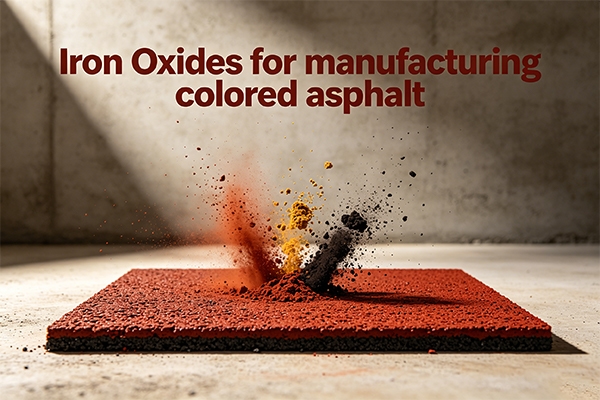
Iron oxides are the most widely used inorganic pigments for producing colored asphalt (colored bituminous mixtures) because they are stable, UV-resistant, and compatible with hot-mix processing.
Common iron oxide pigments used in asphalt
In practice, manufacturers mainly use three forms:
- Red iron oxide (Fe₂O₃, hematite)
- Most common for “brick red” asphalt surfaces
- Very high color stability and weather resistance
- Yellow iron oxide (FeOOH, goethite)
- Produces yellow, ochre, and earthy tones
- Often used in blends to create brown and tan shades
- Black iron oxide (Fe₃O₄, magnetite)
- Used for darkening or adjusting tone depth
- Sometimes used to reduce pigment cost by blending
These are often supplied as synthetic iron oxide pigments (not natural ores) because synthetic grades give more consistent particle size and color strength.
Why iron oxides are preferred for asphalt
Iron oxides dominate colored asphalt manufacturing because they:
- Withstand high mixing temperatures (~150–180°C / 300–350°F) without degrading
- Are UV-stable (no fading under sunlight)
- Are chemically inert in bitumen
- Have good dispersion in binders and mastics
- Are relatively low-cost compared to organic pigments
Typical dosage in colored asphalt
Pigment loading depends on desired color intensity:
- 3–6% by weight of binder (common range)
- Or 0.5–3% by weight of total mix, depending on design
Higher dosages improve color but can slightly affect:
- Workability
- Binder demand
- Cost
Manufacturing considerations
To achieve consistent color, producers usually:
- Add pigments directly into the hot mix plant pugmill or drum
- Or pre-blend pigment into the bitumen (colored binder approach)
- Use light-colored aggregates (e.g., limestone, quartz) since dark aggregates reduce color visibility
- Maintain tight control on mix temperature and residence time
Common applications
Iron oxide–colored asphalt is used for:
- Bike lanes (often red or green-tinted systems)
- Pedestrian walkways
- Decorative paving in urban design
- Traffic calming zones
- Parks and plazas