
Synthetic iron oxides VS organic pigments
Date Published
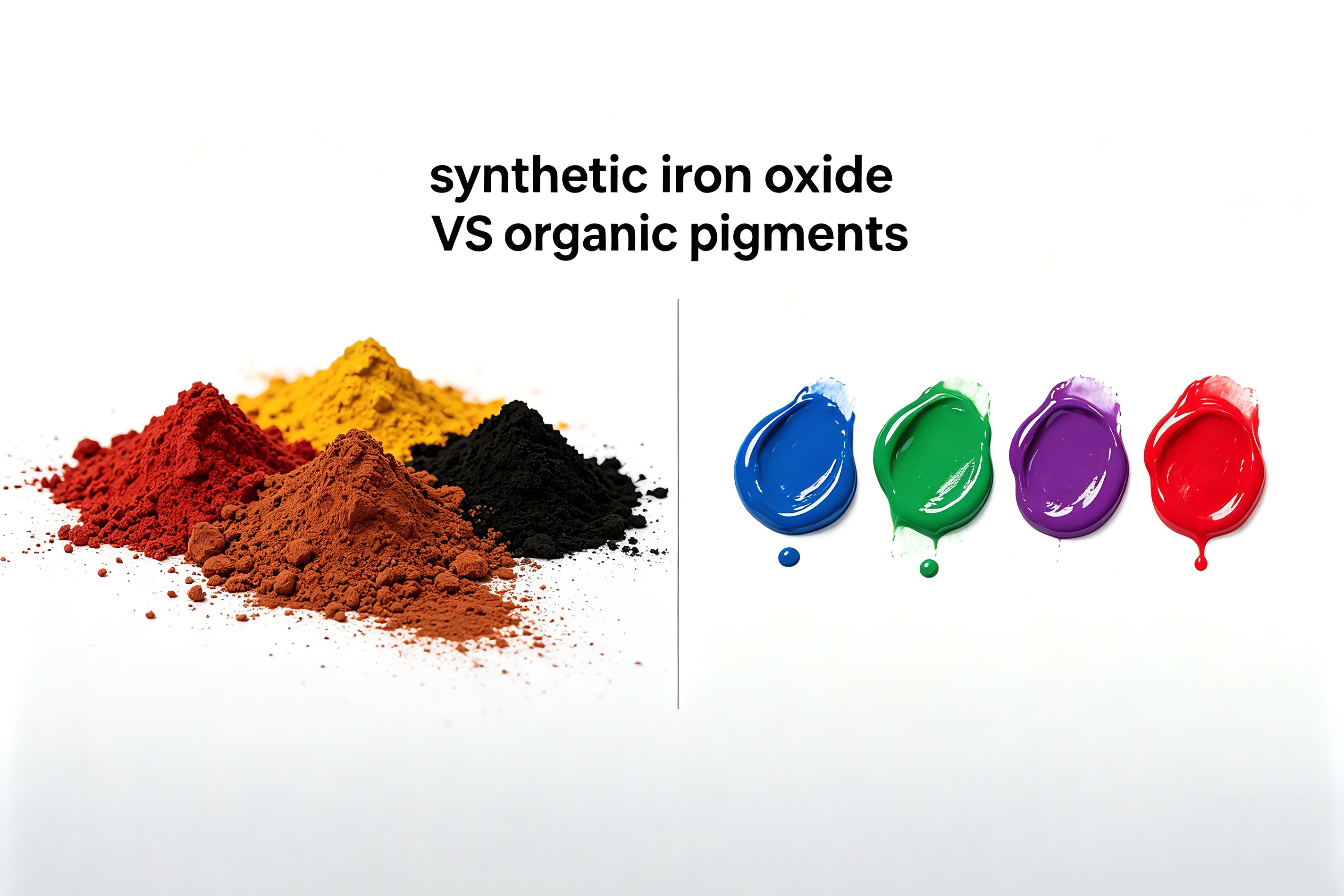
Synthetic iron oxide pigments and organic pigments are both widely used colorants, but they are built on fundamentally different chemistry: inorganic metal oxides vs carbon-based molecules. This structural difference explains why synthetic iron oxides dominate in demanding industrial and outdoor environments.
1. Basic Nature of the Two Pigment Classes
Synthetic iron oxide pigments
These are inorganic crystalline materials based on iron–oxygen compounds such as:
- Hematite (red iron oxide)
- Goethite (yellow iron oxide)
- Magnetite (black iron oxide)
They behave more like stable minerals than reactive chemicals.
Organic pigments
- Carbon-based molecules with conjugated double-bond systems
- Examples include azo pigments, phthalocyanines, and quinacridones
- Color comes from molecular electron transitions rather than crystal lattices
2. Core Performance Comparison (with emphasis on iron oxides)
(1) Weathering and outdoor durability
Synthetic iron oxides are exceptionally stable outdoors:
- No molecular bonds that break easily under UV light
- No significant fading even after decades of sunlight and rain exposure
- Used in bridges, buildings, and concrete structures for long service life
Organic pigments:
- UV light gradually breaks down molecular structures
- Color fading, chalking, or shade shift occurs over time
- Often require stabilizers to extend lifespan
👉 Major advantage: synthetic iron oxides dominate long-term outdoor performance
(2) Chemical stability
Iron oxide pigments are chemically inert in most environments:
- Stable in alkaline systems like cement and mortar
- Resistant to acids, salts, and oxidation (within normal industrial exposure)
- Do not bleed or migrate in coatings or plastics
Organic pigments:
- Can be sensitive to acids, alkalis, or solvents
- Risk of bleeding in plastics or coatings under stress
- More formulation-dependent stability
👉 Advantage: iron oxides provide far more robust chemical resistance
(3) Thermal stability
Synthetic iron oxides:
- Stable at high temperatures (often >600°C, sometimes higher)
- Suitable for ceramics, sintering, asphalt, and high-temperature processing
Organic pigments:
- Typically degrade between 150–300°C
- Limited use in high-heat manufacturing processes
👉 Clear advantage: iron oxides for thermal processing and ceramics
(4) Cost and scalability
Iron oxide pigments:
- Very low production cost
- Produced from abundant iron sources via large-scale industrial processes
- Economically ideal for bulk applications like construction
Organic pigments:
- Complex multi-step chemical synthesis
- Higher production and purification costs
- More expensive per unit color strength
👉 Strong advantage: iron oxides are the most cost-effective industrial pigments
(5) Environmental and safety profile
Synthetic iron oxides:
- Non-toxic and heavy-metal free
- Widely approved for construction, cosmetics, and food-contact applications
- Environmentally stable (do not degrade into harmful byproducts)
Organic pigments:
- Many are safe, but some classes require regulatory scrutiny
- Potential concerns about degradation products in certain conditions
- More variable safety profiles depending on chemistry
👉 Advantage: iron oxides are simpler, safer, and more universally accepted
(6) Color range and visual performance
Organic pigments:
- Very wide color spectrum
- Bright, vivid, high-ch
- High tinting strength at low
Synthetic iron oxide
- Red, yellow, black
- Green, brown, blue, orange
- Earthy, natural tones with lower brightness
👉 Organic pigments are better in color range.
(7) Dispersion
Iron oxide pigments:
- Excellent performance in cement
- High density can cause settling in liquid systems, but stable once incorporated
- Strong opacity and coverage in construction materials
Organic pigments:
- Easier to suspend in inks and low-density systems
- Often require dispersants or surface treatments for stability
👉 Context-dependent advantage
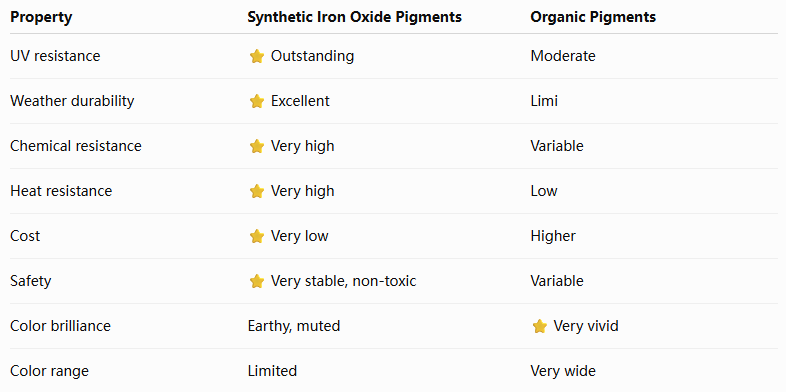
3. Summary Table
4. Key Advantages of Synthetic Iron Oxide Pigments
Synthetic iron oxide pigments are preferred in industry because they deliver:
- Exceptional long-term durability (decades without fading outdoors)
- Outstanding UV and weather resistance
- Strong chemical and alkaline stability (especially in cement systems)
- High thermal stability for high-temperature processing
- Very low cost and large-scale availability
- Excellent environmental safety and regulatory acceptance
5. Where Iron Oxides Are the Industry Standard
Because of these advantages, synthetic iron oxides dominate in:
- Concrete and architectural materials
- Roof tiles, bricks, and paving stones
- Industrial coatings and primers
- Asphalt coloring
- Ceramics and construction composites
Final takeaway
Organic pigments win when color brilliance and design flexibility are the priority.
Synthetic iron oxide pigments win when the requirements are durability, stability, safety, and cost-efficiency over decades of service life—which is why they are the backbone of construction and infrastructure coloration worldwide.